
FHV Treatment Guidelines
Eye signs, flare-ups, and how to care for a cat with Feline Herpesvirus.
Feline Herpesvirus (FHV-1) is one of the most common viral infections in cats and the main cause of what owners call cat flu. Most cats live full, comfortable lives with it, but the virus stays in the body for life and can flare up during stress. This guide helps you recognise the signs, understand what treatment can and cannot do, care for your cat at home, and know what recovery realistically looks like.
- Eye and respiratory care
- Flares ease in days to weeks
- Vet guided protocol
What this guide covers
The four parts of caring for your cat.
- 1Recognise the signsEye, respiratory and recurrent signs
- 2Why the eyes matterThe hallmark of Feline Herpesvirus
- 3Treatment and home careWhat it can and cannot do
- 4Recovery expectationsLiving well with the virus
- EyesThe hallmark sign to watch
- DaysFlares ease within days to two weeks
- LifeVirus stays for life, but manageable
- 2019Trusted since
The basics
What is Feline Herpesvirus in cats?
Feline Herpesvirus (FHV-1) is a highly contagious virus and the primary cause of feline viral rhinotracheitis, part of the upper respiratory disease complex in cats. A defining feature is latency: after the first infection the virus retreats into the nerves and stays there permanently. It cannot be cleared from the body, but in most cats it stays quiet and only reactivates during periods of stress. This is why treatment focuses on controlling flare-ups and protecting the eyes, not on eliminating the virus.
- 1
A virus that stays for life
Once a cat is infected, Feline Herpesvirus (FHV-1) lives in the nerves permanently. Most of the time it stays dormant and causes no signs at all.
- 2
Flares triggered by stress
A move, a new pet, boarding or illness can wake the virus. Flares bring sneezing and eye signs, then settle again with prompt care.
Good to know: Feline Herpesvirus (FHV-1) is not the same virus as human cold-sore herpes. It infects cats and does not spread to people or dogs.
Stage 1
Recognising signs of Feline Herpesvirus
The picture varies with the cat's age, stress level, and whether other infections are present. Eye signs are the most telling. Watch for these.
- 1Sneezing, often in bouts
- 2Watery or runny eyes
- 3Clear nasal discharge
- 4Squinting or a partly closed eye
- 5Red, swollen conjunctiva
- 6Thick eye discharge
- 7Corneal ulcers
- 8Mild lethargy
- 9Reduced appetite
- 10Repeated eye or respiratory flares
The branching "dendritic" corneal ulcer is characteristic of Feline Herpesvirus (FHV-1). Repeated or long-lasting eye infections are a classic pattern of the virus reactivating.
Stage 2
Why the eyes matter most
For many cats, Feline Herpesvirus (FHV-1) shows up first and worst in the eyes. The virus attacks the surface of the eye and can cause painful corneal ulcers. Untreated, severe ocular Feline Herpesvirus (FHV-1) can threaten the eye itself.
Treat eye signs as urgent
If your cat is squinting, keeping an eye closed, or has a cloudy spot on the eye surface, contact your veterinarian promptly. Eye flares are the situations where prompt antiviral and supportive care make the biggest difference.
Stage 3
Treatment and home care
There is no treatment that removes Feline Herpesvirus (FHV-1) from the body, so the goal is to shorten flares, ease symptoms and protect the eyes. Home care does not replace veterinary treatment, but it makes a real difference to comfort and recovery during a flare.
HerpX for Feline Herpesvirus.
HerpX is an oral antiviral for Feline Herpesvirus (FHV-1), containing famciclovir, the antiviral most used for the virus in cats and considered systemically safe when dosed appropriately. It is used to bring active flares under control, particularly when the eyes are involved.
- Oral antiviral therapy to shorten and control active flares.
- Supportive care: lubricating eye drops, fluids, and nutritional support.
- Antibiotics only if a secondary bacterial infection is present, since the virus itself is not bacterial.
- 1
Reduce stress
Stress is the single biggest trigger for flare-ups. Keep routines steady, minimise upheaval, and give a multi cat home enough space, litter trays and hiding spots.
- 2
Keep the face clean
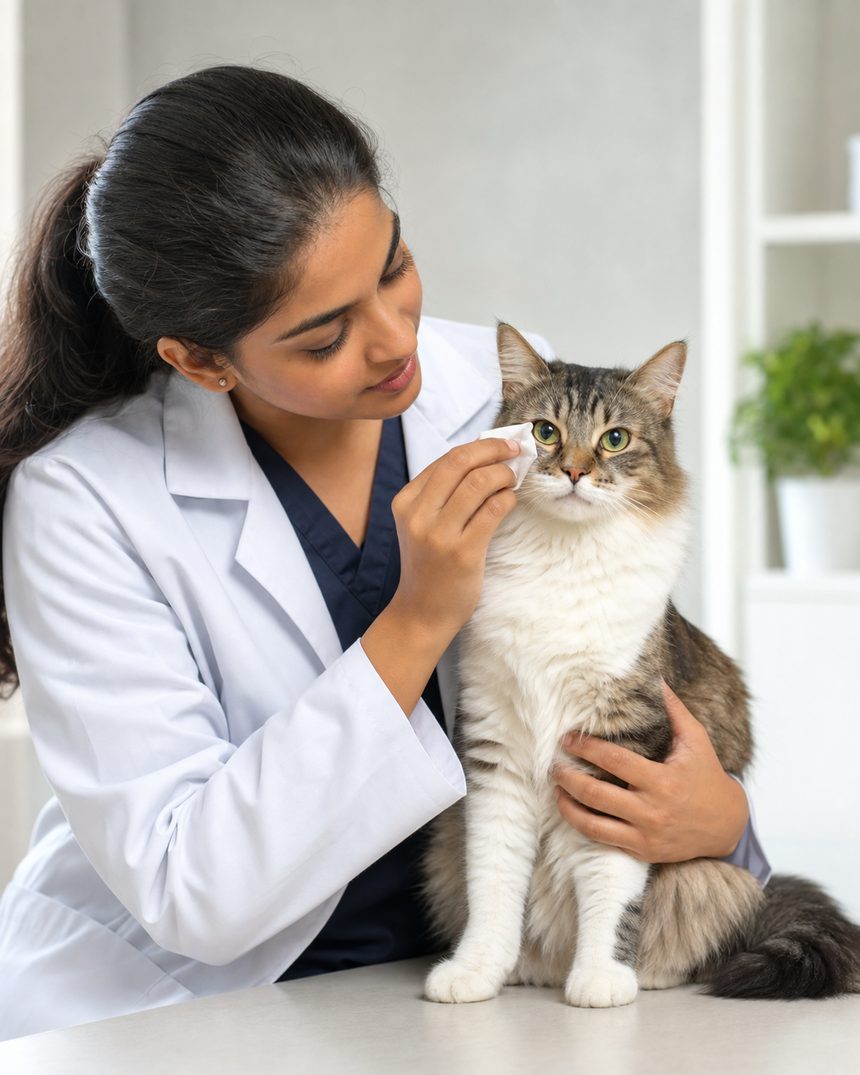
Gently wipe away eye and nasal discharge with a clean, damp cloth, using a fresh area for each eye.
- 3
Open the airways
A few minutes in a steamy bathroom, or a humidifier, helps loosen nasal congestion so your cat can breathe and smell food.
- 4
Protect appetite
A blocked nose dulls smell, so cats stop eating. Warm the food, offer strong smelling wet food, and watch intake. A cat that stops eating needs to be seen quickly.
Never give human cold-sore creams or human antiviral tablets on your own. Some human antivirals are dangerous for cats. Only use medication your veterinarian has prescribed.
Stage 4
Recovery expectations
Recovery, with Feline Herpesvirus (FHV-1), means a comfortable cat with controlled signs and protected eyes. It does not mean a virus-free cat. Here is what to expect.
- 1
Flares improve quickly
Most flares improve within days to a couple of weeks with prompt, appropriate care.
- 2
The virus does not leave
Even after a full recovery, your cat carries Feline Herpesvirus (FHV-1) for life and may have occasional flares, usually around stressful events.
- 3
Some cats are carriers
Certain cats look healthy but can shed virus and infect other cats during flares, so hygiene during a flare matters.
- 4
A few need ongoing care
A minority develop chronic signs, such as long-term snuffles or recurrent eye problems, and need an ongoing management plan with their veterinarian.
FAQ
Common questions about Feline Herpesvirus
Is Feline Herpesvirus contagious to other cats?
Yes. It spreads easily between cats through direct contact, sneezing, and shared bowls or bedding, especially in multi cat homes and shelters.
Can my cat infect me or my dog?
No. Feline Herpesvirus (FHV-1) infects cats. It is not the same virus as human cold-sore herpes and does not spread to people or dogs.
Is there a cure for Feline Herpesvirus?
No treatment removes the virus, because it stays latent in the nerves for life. However, flares can be controlled well, and most cats live normal lives with good management.
Can vaccinated cats still get Feline Herpesvirus?
Yes. Vaccination reduces the severity of disease but does not fully prevent infection or carrier status.
Does L-lysine help?
L-lysine is widely sold for Feline Herpesvirus (FHV-1), but the published evidence is mixed and several studies found no clear benefit. Discuss it with your veterinarian rather than relying on it as a main treatment.
Why does my cat keep getting eye infections?
Recurrent eye infections are a classic pattern, driven by reactivation of the latent virus during stress. A plan focused on stress reduction and prompt antiviral care during flares helps.
How long does a flare take to settle?
Most flares ease within days to a couple of weeks with prompt, appropriate care. Some cats continue to shed the virus for longer, even after the visible signs clear.
Think your cat may have Feline Herpesvirus?
If your cat is sneezing in bouts, squinting, or has watery or crusted eyes, act early, when treatment helps most. Talk to our specialists to get started.
This page is for general educational purposes and does not replace veterinary advice. Always consult a qualified veterinarian for diagnosis and a treatment plan tailored to your cat.